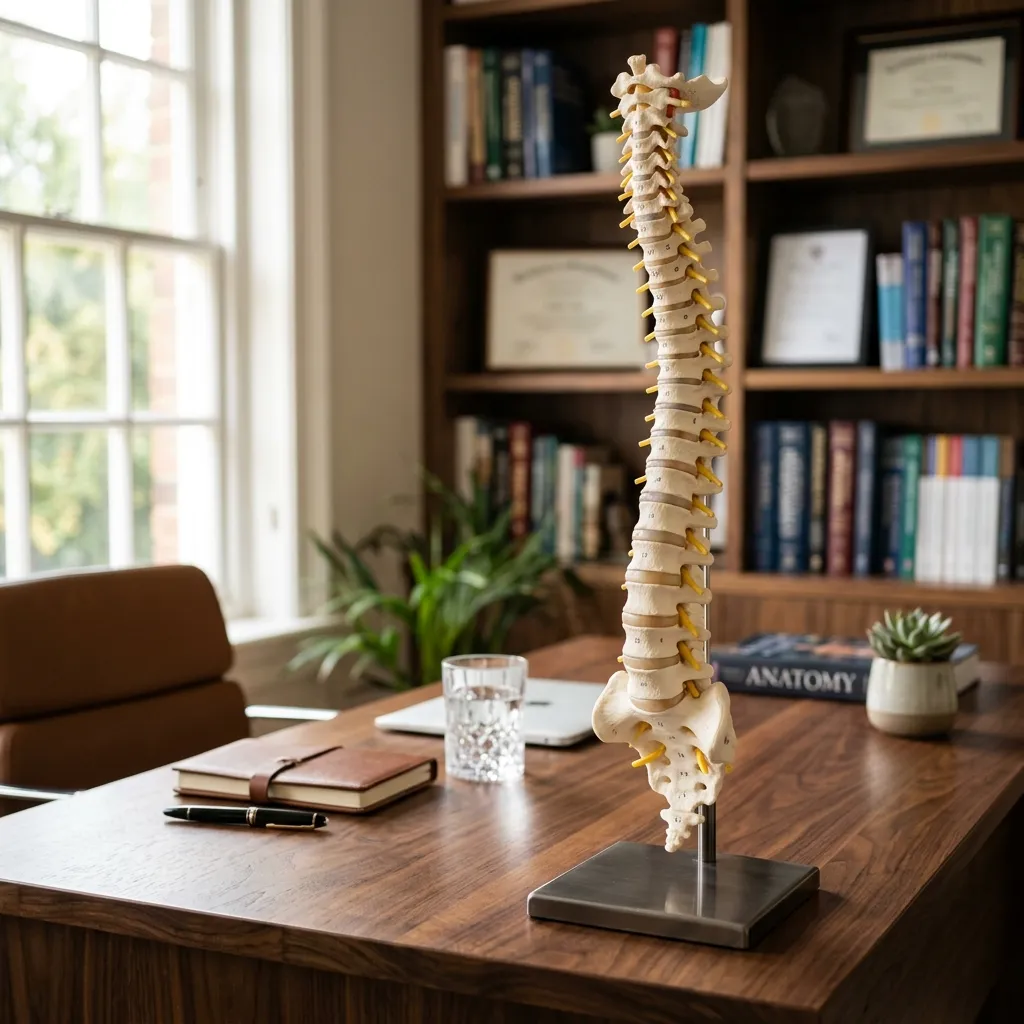
Executive Practice Profile
Legal Spine is the dedicated medicolegal practice of neurosurgeon Dr Ales Aliashkevich, focused on complex spinal, brain and peripheral nerve injuries arising in compensation and liability disputes across Victoria and nationally. Over more than seventeen years providing neurosurgical medicolegal opinions, Dr Aliashkevich has combined an active operative workload with detailed, statute-aligned assessments for transport accident, workplace injury, public liability and medical negligence matters.
This dual perspective - surgeon at the operating table and expert in the witness box - anchors each opinion in both contemporary clinical practice and the legal frameworks within which damages and statutory benefits are determined.
Referrers engage Legal Spine when the medical issues at stake are not trivial: disputed causation in high-velocity collisions, persistent neurological deficits after spinal surgery, subtle brain injury, or multi-level degenerative change sitting uneasily alongside a single compensable event.
Who this practice is for
This practice is designed for experienced professionals who rely on clear, defensible neurosurgical evidence to make or challenge decisions about liability, impairment and work capacity. Each report is written for non-clinical readers while retaining the depth expected by specialist counsel and Medical Panels.
- TAC, SIRA, and WorkSafe agents, self-insurers and employers managing statutory compensation claims.
- Plaintiff and defence law firms conducting transport accident, workers compensation, common law and medical negligence litigation.
- Superannuation trustees and income protection or TPD claim managers assessing long-term incapacity for work.
- Courts, tribunals, and commissions evaluating complex neurosurgical evidence.
What Legal Spine does not do
Legal Spine is not a treating clinic and does not provide routine medical care, prescriptions or ongoing referrals. No doctor-patient relationship is created by a medicolegal assessment, and claimants are directed back to their treating practitioners for therapeutic decisions.
The practice does not act as a plaintiff doctor or an insurer doctor. The role is strictly independent, with primary duties owed to the court or tribunal and to the integrity of the statutory schemes in which opinions are used.
Active neurosurgical practice informing medicolegal opinion
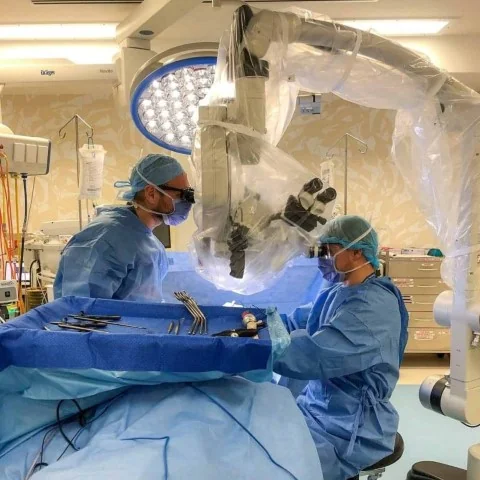
Unlike retired or exclusively medicolegal examiners, Dr Aliashkevich continues to practise as a consultant neurosurgeon, performing modern cranial and spinal procedures including minimally invasive decompressions and motion-preserving interventions.
This day-to-day exposure to contemporary techniques, peri-operative risks and real-world functional outcomes allows the practice to assess not only what appears on the scan, but also what current evidence-based treatment realistically offers a particular claimant.
When future surgery is in issue, the opinion is grounded in lived experience of risk-benefit profiles, complication rates and rehabilitation timelines rather than theoretical possibilities. When past surgery is challenged as unnecessary or excessive, the analysis reflects the standards expected of a contemporary neurosurgeon operating within multidisciplinary teams and guideline-driven care pathways.
Because operative practice continues alongside medicolegal work, Dr Aliashkevich remains current with advances in 3T MRI, CT myelography, intra-operative imaging and neurophysiological monitoring, and integrates these developments into the interpretation of radiological and electrophysiological evidence.
Embedded in state and national compensation and liability schemes
Legal Spine operates with a detailed understanding of the principal statutory regimes governing personal injury compensation across Australia. Dr Aliashkevich provides expert assessments that align with the legislative requirements of multiple jurisdictions, including Victoria's transport accident and workplace safety systems, New South Wales' motor accidents and workers compensation schemes, and Commonwealth frameworks.
Assessments are structured to comply with the distinct operational guidelines of key statutory bodies. This includes independent medical examinations under WorkSafe Victoria and the Transport Accident Commission (TAC) in Victoria, and the State Insurance Regulatory Authority (SIRA) in New South Wales. At the Commonwealth level, the practice provides assessments under Comcare's national scheme for federal employees and licensees.
Dr Aliashkevich's credentials and appointments reflect this multi-jurisdictional capability. He is an accredited permanent impairment assessor in New South Wales, searchable via the SIRA Permanent Impairment Assessors directory, and maintains active specialist standing, detailed in his Royal Australasian College of Surgeons (RACS) profile.
Outside these statutory frameworks, the practice provides expert opinions in common law personal injury and medical negligence matters nationwide, applying state-specific legislation (such as the Wrongs Act 1958 in Victoria or the Civil Liability Act 2002 in New South Wales) to address liability, causation, and significant injury thresholds.
Video: Dr Ales Aliashkevich discusses Medicolegal AI Restrictions.
Expertise in AMA Guides, SIGMD and apportionment
The American Medical Association Guides to the Evaluation of Permanent Impairment remain the dominant reference for quantifying permanent bodily impairment in Australian compensation schemes, with the Fourth and Fifth Editions adapted to local legislative requirements.
Dr Aliashkevich has completed ministerially approved training in the use of the AMA Guides for the spine and nervous system as applied to relevant Victorian legislation, and holds accreditation through AMA Victoria and the Personal Injury Education Foundation for impairment assessment.
For TAC spinal claims arising from accidents on or after 14 December 2016, he is accredited to apply the Spinal Impairment Guides Modification Document, which modifies aspects of Chapter 3 of the Guides for use in the Victorian transport accident context.
These qualifications matter because SIGMD is authorised only for prescribed TAC spinal impairments and is not available for WorkSafe or Wrongs Act assessments. Legal Spine reports identify clearly which framework is being applied - AMA4 alone, AMA4 with spinal modifications, AMA5 where relevant, or Comcare's Commonwealth guide - and explain the logic behind each step of the calculation.
Apportionment in complex spinal cases is treated with equal rigour. Drawing on serial imaging, clinical chronology and operative findings, Dr Aliashkevich provides reasoned apportionment opinions rather than arbitrary percentages.
Neurosurgical medicolegal expertise in spine and brain injury
Within this statutory and guideline framework, Legal Spine focuses on spinal and brain injury cases where neurosurgical expertise adds genuine value. These include cervical and lumbar disc herniations, spinal canal stenosis, post-laminectomy syndromes, vertebral fractures, traumatic brain injury, subdural and subarachnoid haemorrhage and peripheral nerve injuries arising from trauma or iatrogenic causes.
In spinal matters, reports explore not simply structural abnormalities but their translation into clinically meaningful restrictions in lifting, sitting, standing, walking and spinal movement, using both neurological examination and functional enquiry.
In brain injury cases, opinions consider cognitive, behavioural and neuropsychiatric sequelae in conjunction with imaging, neuropsychological testing and reports from treating practitioners, helping courts and tribunals understand how apparently mild imaging changes can nonetheless have significant vocational and social consequences.
Because Dr Aliashkevich performs both decompressive and stabilising surgery, including minimally invasive and motion-preserving techniques, he is well placed to comment on past surgical choices, indications for revision surgery, and the likely impact of further procedures on impairment and work capacity.
The Legal Spine value proposition for referrers
Referrers repeatedly brief Legal Spine in matters where the quality of neurosurgical reasoning may determine liability, quantum, work capacity, impairment threshold or treatment exposure.
- High-resolution imaging, including 3T MRI and CT myelography, must be interpreted with subtle neurological signs and complex pre-existing pathology.
- Distinctions between age-related degeneration and trauma-related change are central to liability and quantum.
- Statutory thresholds, including Wrongs Act significant injury gateways and scheme-specific whole person impairment levels, may determine whether a claim proceeds.
- Work capacity and return-to-work prospects require both guideline-based impairment assessment and practical appreciation of modern workplace demands.
Report style and decision-maker utility
The writing style of Legal Spine reports is deliberate. Each document is structured so non-clinical readers - judges, arbitrators, conciliation officers, case managers and lawyers - can follow the reasoning from background facts through clinical findings to conclusions without losing the precision needed for Medical Panels and specialist cross-examiners.
For legal practitioners and insurers, this approach translates into more than a checklist of diagnostic labels. Reports are framed around the questions that drive outcomes: whether an accident materially contributed to the current condition, whether claimed incapacity is consistent with observed and tested function, whether guideline thresholds are met, what future treatment is reasonable, and how long any restriction on employment is likely to persist.
Expert duties, independence and report standards
Legal Spine's work is grounded in the expert witness duties recognised across Australian courts. Dr Aliashkevich owes his primary duty to the court or tribunal rather than to any party, and maintains that duty whether instructed by plaintiffs, defendants, insurers or statutory bodies.
Opinions are transparent about assumptions, limitations and areas of genuine medical uncertainty. Each report identifies the material relied upon, distinguishes facts from assumptions, and explains how alternative explanations were considered and weighed.
Where questions stray beyond neurosurgery, that limitation is acknowledged and no speculative opinion is offered. If significant new information emerges after a report is issued, the practice can provide considered supplementary opinions rather than silently maintain outdated conclusions.
When reports are subjected to conciliation at the Workplace Injury Commission, reconsideration by TAC, review within Comcare or judicial scrutiny under the Wrongs Act, their strength lies in the combination of detailed neurosurgical analysis, accurate statutory and guideline application, and clear communication.