Referrals, Locations and Contact
Legal Spine is structured to make the referral process straightforward for experienced practitioners while preserving the level of clinical and legal detail required in complex spinal, brain and peripheral nerve matters.
The practice accepts instructions across the full spectrum of Victorian and Commonwealth compensation schemes, as well as Wrongs Act and TPD litigation, and tailors its intake to support efficient, high-quality assessments.

Referral pathways and required documentation
Referrals are accepted from TAC and WorkSafe agents, self-insurers, employers, Comcare, superannuation trustees and both plaintiff and defence legal practitioners.
To ensure each assessment is comprehensive and efficient, referrers are encouraged to provide a complete, well-organised brief at the outset rather than drip-feeding critical documents over time.
Upon receipt of a complete brief, the practice can provide a fee estimate based on the volume of material, complexity of injuries, number of questions posed and urgency of the matter.
Where instructions involve extensive document volumes or highly complex neurosurgical issues, such as multi-level degenerative disease, multiple operations or concurrent neurological and psychiatric injuries, the estimate reflects the time needed for thorough review and report preparation.
A clear letter of instruction
The instruction should set out the legal and statutory context, such as TAC under the Transport Accident Act, WorkCover under workplace injury legislation, Comcare, Wrongs Act significant injury, income protection or superannuation TPD.
It should identify the specific questions to be answered and any relevant court, tribunal or statutory timetables. Explicit questions on liability, causation, treatment, impairment and work capacity enable the report to address the matters that actually drive decision-making.
Prior medicolegal and treating material
Copies of previous medicolegal reports, treating practitioner correspondence, operative notes and discharge summaries provide essential context, particularly where there are competing expert views or allegations of inappropriate treatment.
This material allows Dr Aliashkevich to map the clinical narrative, understand prior opinions and explain areas of agreement and divergence in a way that assists conciliators, arbitrators and courts.
Imaging, investigations and statutory materials
All available imaging reports and, where possible, image files in digital form should be supplied. Relevant studies may include MRI, CT, CT myelography, X-ray, EMG, nerve conduction studies and laboratory results.
Direct review of images, rather than reliance on summary reports alone, is central to neurosurgical medicolegal practice and supports accurate impairment assessment and apportionment opinions.
Relevant statutory notices, decision letters, Medical Panel referrals, conciliation outcomes and arbitration materials provide the legal scaffolding for the opinion and allow the report to engage with existing reasons rather than restating the case from first principles.
This alignment is particularly important in WorkSafe and TAC matters, where scheme-specific language and thresholds shape both entitlements and review pathways.
- A clear letter of instruction setting out the legal context and specific questions.
- Prior medicolegal reports, treating correspondence, operative notes and discharge summaries.
- All available imaging reports and, where possible, image files in digital form.
- Relevant statutory notices, decisions and conciliation or arbitration materials.
Locations and flexible arrangements
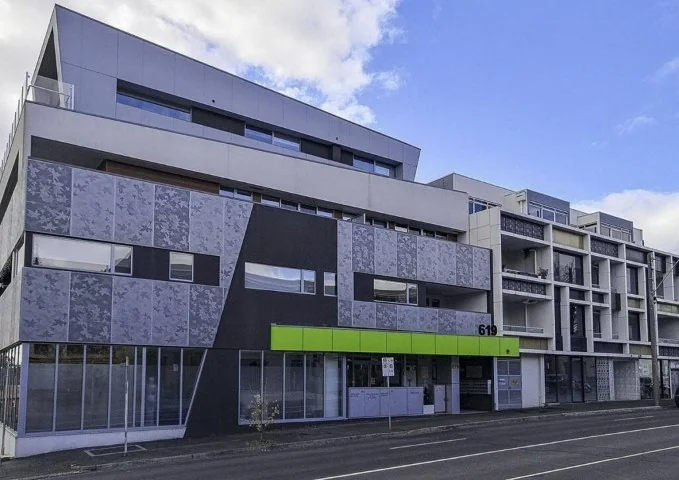
Medicolegal appointments are coordinated centrally through the miNEURO Medicolegal Team (Office 4, Ground Floor, 619-625 Canterbury Road, Surrey Hills VIC 3127), with additional availability across metropolitan Melbourne and selected regional hubs.
This networked model allows claimants to be seen closer to home where appropriate, while maintaining consistent standards of examination, history-taking and reporting at all sites.
Location selection is driven by clinical and logistical considerations: the nature of the injury, the need for specific examination facilities, claimant mobility, interpreter availability and the timeframes within which the opinion is required.
For referrers managing multiple claims or medicolegal appointments, central coordination through a single medicolegal office simplifies scheduling and communication, even where assessments take place across different consulting rooms.

Telehealth and remote components
In suitable cases, particularly where the issues are largely documentary or radiological, or where a claimant's travel would be unduly burdensome, assessments can incorporate secure video conference components.
Remote formats may be appropriate for file reviews, supplementary opinions or focused updates on issues such as stability and prognosis, provided that the limitations of telehealth for physical examination are acknowledged.
Any report relying partly or wholly on telehealth explicitly records those limitations, so courts, tribunals and statutory decision-makers can assess the weight to be given to particular findings and, if necessary, seek additional in-person examination at a later stage.
Contact and timeframes
Referrers seeking to brief Dr Aliashkevich for an Independent Medical Examination, Joint Medical Examination, statutory impairment assessment, Wrongs Act Certificate of Assessment or expert court report are invited to contact the practice by telephone or secure email.
Initial contact can be used to outline the nature of the claim, confirm the availability of relevant dates and flag any urgency, such as approaching conciliation, arbitration or trial listings.
Where court-imposed or statutory timeframes apply, the practice endeavours to accommodate urgent matters through flexible timetabling, including extended clinics and, where genuinely necessary, weekend or out-of-hours appointments.
In urgent matters, early provision of the brief and clear identification of key deadlines significantly improves the likelihood of meeting tight timeframes without compromising the depth and quality of the assessment.
- Address: miNEURO Medicolegal Team, Office 4, Ground Floor, 619-625 Canterbury Road, Surrey Hills VIC 3127
- Phone: 03 90084200
- Fax: 03 99236688
- Email: ml@mineuro.com.au
- Website: miNEURO.com.au
Location and public transport access
The miNEURO Medicolegal Team consulting rooms are conveniently located near the newly completed Union Station in Surrey Hills, providing excellent public transport access via the Lilydale and Belgrave train lines.
It is a short walk from the station to the clinic along Canterbury Road.
Communication during the instruction
Throughout the life of the instruction, communication with instructing parties is handled through defined channels.
The practice provides prompt acknowledgement of new material, clarification of ambiguous questions and, where required, discussion about the need for supplementary reporting when circumstances change.
This structured approach ensures that the medicolegal opinion evolves in step with the evidentiary landscape rather than lagging behind it.
Why referrers choose Legal Spine
By combining active neurosurgical practice, deep familiarity with Victorian and Commonwealth compensation regimes, and meticulous medicolegal methodology, Legal Spine offers referrers a level of analytical precision that is both clinically grounded and legally literate.
Reports are crafted to withstand scrutiny by conciliators, arbitrators, courts and opposing experts, while remaining sufficiently clear and structured for busy practitioners and claims managers to navigate quickly.
For TAC and WorkSafe agents, self-insurers, Comcare delegates, superannuation trustees and litigators on both sides of the record, the result is a suite of opinions that not only meet statutory and evidentiary requirements, but also support robust, timely and fair decision-making for injured people and the systems responsible for their compensation.