
Independent and Joint Medical Examinations
Independent and Joint Medical Examinations sit at the heart of Legal Spine's medicolegal work, providing robust neurosurgical opinions that guide statutory decision-makers, courts and insurers through complex spinal and brain injury disputes.
Each assessment is a non-treating, independent expert evaluation rather than a clinical consultation, with a clear focus on causation, impairment, treatment needs and work capacity in the context of Victorian and Commonwealth compensation schemes.
For referrers, these examinations offer a structured way to convert dense clinical information - radiology, operative notes, neurophysiology and functional history - into clear answers to the questions that determine entitlements and liability.
What is an Independent Medical Examination?
An Independent Medical Examination is a formal assessment conducted by a specialist who is not the claimant's treating practitioner. The examiner is instructed to provide an impartial opinion on diagnosis, prognosis, impairment and functional capacity for legal and compensation purposes.
Medical records are reviewed, detailed questions are asked about the history of injury and treatment, and a focused physical examination may be conducted. The resulting report is provided to the requesting party rather than to the claimant as a patient.
The examiner's role is distinct from that of a treating doctor. An Independent Medical Examiner does not prescribe medications, order routine investigations for ongoing care or offer follow-up treatment. Information provided by the claimant is used to inform decisions about liability, eligibility for benefits, the reasonableness of proposed treatment and the extent of any work-related limitations.
IMEs at Legal Spine: neurosurgical depth for complex injuries
At Legal Spine, Independent Medical Examinations are requested where neurosurgical expertise is central to resolving a dispute. Typical instructions involve spinal canal stenosis, disc prolapse, post-laminectomy syndromes, vertebral fractures, traumatic brain injury or complex peripheral nerve lesions, often superimposed on a background of degenerative disease and prior trauma.
Before each IME, Dr Aliashkevich undertakes a meticulous review of the briefed material, including prior medicolegal reports, treating specialist letters, imaging reports, operative notes and any surveillance or workplace documentation.
This preliminary analysis highlights inconsistencies, gaps and key issues - such as contested accident mechanisms, disputed work capacity or divergent surgical opinions - that require particular attention during the consultation.
The consultation follows a structured but conversational format. It covers pre-injury health, educational and vocational history, the mechanism and immediate aftermath of injury, the course of symptoms and treatment, and current functional limitations across work, home duties and recreation.
A detailed neurological examination is then performed, directed at correlating subjective complaints with objective signs and imaging findings, including assessment of strength, reflexes, sensation, gait and spinal movement.
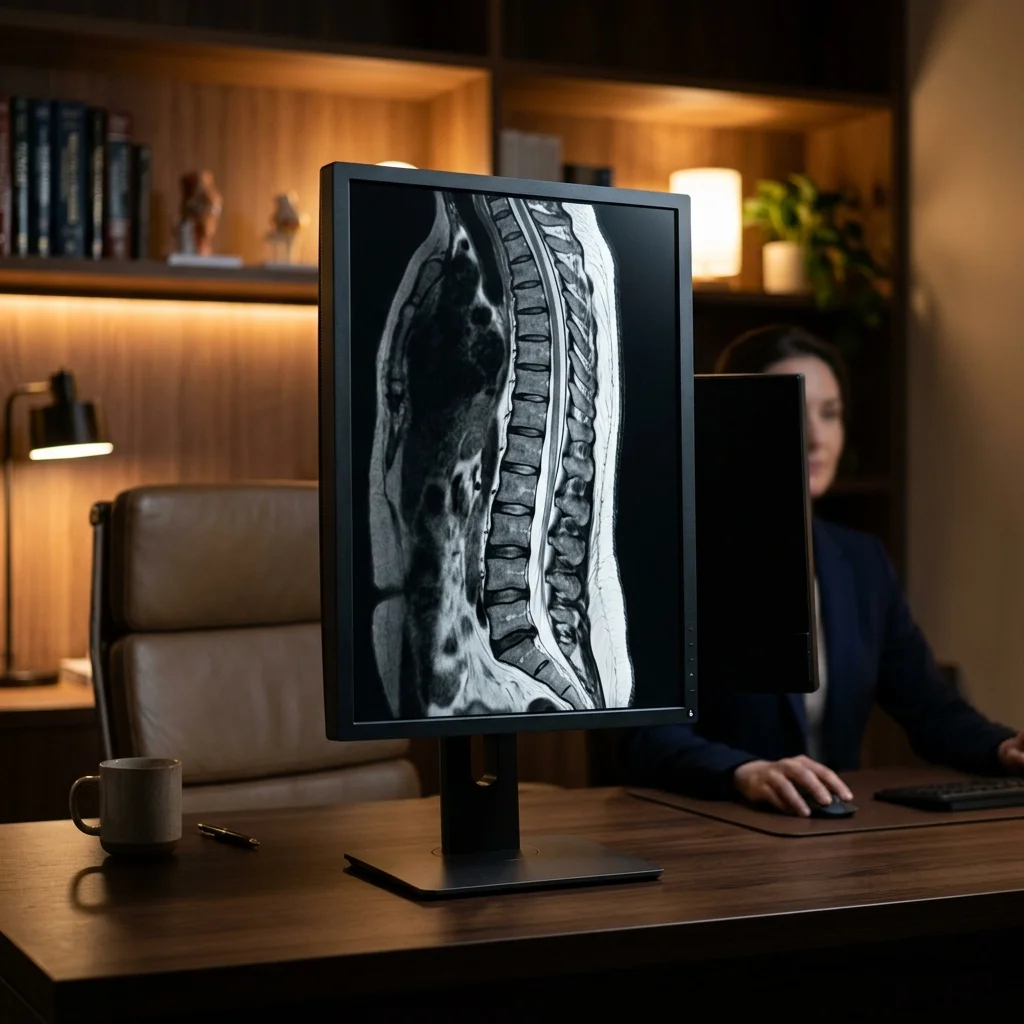
From neurosurgical findings to scheme-specific questions
The resulting IME report does more than recite diagnostic labels. It engages explicitly with the questions posed under the relevant scheme.
- Are current symptoms causally related to the index accident or exposure?
- Is the proposed surgery reasonable and necessary in light of contemporary neurosurgical practice?
- Does the claimant have capacity for pre-injury duties, modified duties or alternative employment?
- Are statutory thresholds for permanent impairment or significant injury met?
Impairment, apportionment and decision support
Where whole person impairment is in issue, the report applies the appropriate AMA-based methodology and, where lawfully applicable, scheme-specific instruments such as the spinal modification document for certain TAC spinal claims. Each step of the calculation is shown rather than simply stating a percentage.
Particular attention is paid to apportionment where there is pre-existing degeneration, prior injury or multiple events. The report explains what portion of the overall impairment is reasonably attributable to the compensable incident versus other causes, using imaging chronology, clinical evolution and operative history rather than arbitrary percentages.
For TAC and WorkSafe agents, IME reports support decisions on ongoing medical and like expenses, weekly payments and lump-sum entitlements. For Comcare, they inform determinations of permanent impairment and rehabilitation pathways. Legal practitioners use the same analysis to assess prospects, advise on settlement ranges and frame pleadings or submissions in a way that reflects the underlying neurosurgical reality.
Joint Medical Examinations for TAC claims
Joint Medical Examinations have become a defining feature of transport accident litigation and dispute resolution in Victoria. They are designed to reduce the burden of multiple examinations and to provide a single, shared expert opinion.
In a JME, TAC and the claimant's legal representative jointly agree to a specialist examiner, present a consolidated set of questions and receive one medicolegal report that is used to determine impairment, entitlements and, where relevant, common law damages.
From the claimant's perspective, a JME usually means one appointment instead of separate examinations for TAC and their legal team. From the system's perspective, JMEs encourage collaboration between TAC, the legal profession and independent examiners and provide a common evidentiary platform for negotiation and, if necessary, trial.

Why referrers choose IME or JME with Dr Aliashkevich
Referrers turn to Legal Spine for IMEs and JMEs when the case requires more than a generic, short-form report.
- The dispute involves fine distinctions between traumatic and degenerative spinal pathology and an opinion is needed on apportionment and progression.
- There is disagreement between treating surgeons, or between earlier IME reports, about the appropriateness of surgery, its outcome or the need for revision procedures.
- Whole person impairment thresholds under TAC, WorkSafe, Comcare or the Wrongs Act are likely to determine whether a claim can proceed or whether non-economic loss is available.
- Work capacity and return-to-work plans require translation of neurological findings into realistic occupational restrictions and prospects.
A coherent narrative for claims and litigation strategy
The practical benefit for insurers, statutory bodies and legal practitioners is that an IME or JME with Dr Aliashkevich offers a coherent, neurosurgically sophisticated narrative that can be adopted, tested or challenged on its merits rather than a perfunctory checklist.
Claims managers and lawyers can readily identify how the clinical evidence intersects with statutory entitlements and can make informed decisions about settlement, litigation and rehabilitation strategies.
Independence, fairness and claimant experience
Every Independent or Joint Medical Examination conducted through Legal Spine is grounded in the principle that the examiner's primary duty is to the court or tribunal rather than to any party. That duty of independence is explained to claimants at the outset, together with clear information about the nature of the examination, the approximate duration and any procedures that may be required.
While the assessments are not therapeutic in purpose, the practice recognises that many claimants attend with chronic pain, psychological distress or cognitive difficulties and may have already undergone multiple assessments.
Appointments are conducted in an environment that is calm, orderly and respectful, with adequate time allocated for history, examination and questions, and with clear explanations about what will happen after the report is completed.
In this way, Independent and Joint Medical Examinations at Legal Spine combine rigorous neurosurgical analysis and legal literacy with a humane, structured approach to claimant experience, improving the reliability of the information obtained and the quality of the decisions that depend upon it.