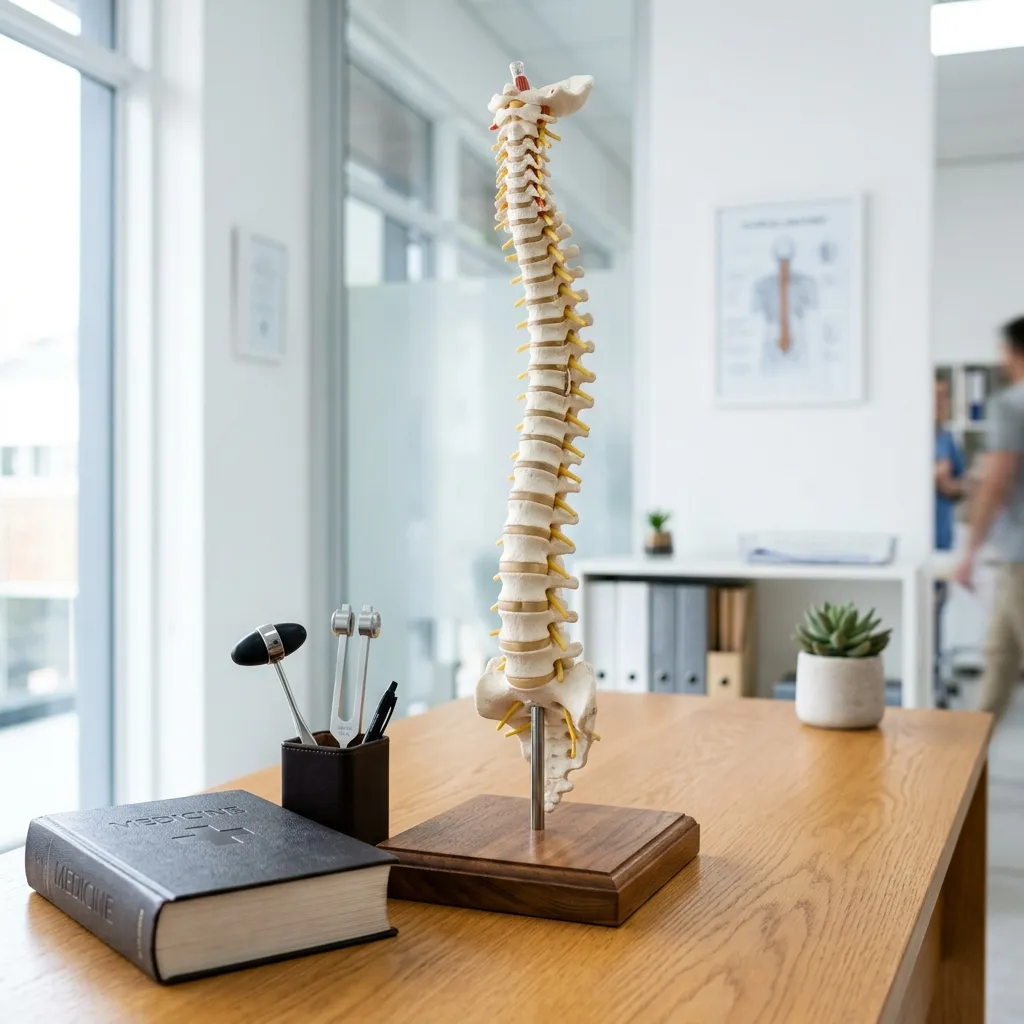
Statutory impairment and Whole Person Impairment assessments
Statutory impairment and Whole Person Impairment assessments sit at the junction of medicine and law, translating complex neurological injuries into percentages that drive entitlements, thresholds and settlement strategy.
For TAC, WorkSafe, Comcare and Wrongs Act matters, those percentages are not abstract numbers. They determine whether a claimant crosses a statutory gateway, attracts a lump-sum benefit, or gains access to non-economic loss.
Legal Spine positions these assessments within their proper statutory context, using AMA-based methodologies and Victorian modifications in a way that is faithful both to the medicine and to the schemes that rely upon it.
Each assessment is a non-treating, independent expert exercise, with guide selection and apportionment undertaken transparently so that courts and decision-makers can see exactly how the figures have been reached.
The role of the AMA Guides in Australian impairment schemes
The American Medical Association Guides to the Evaluation of Permanent Impairment have, for more than fifty years, provided the dominant international framework for quantifying permanent loss of bodily function.
Across Australian workers compensation and transport schemes, the Fourth and Fifth Editions have been adopted, often with jurisdiction-specific modifications, as the reference texts for calculating Whole Person Impairment.
The AMA Guides emphasise reproducibility, requiring assessors to combine structured history-taking, examination and investigation review in a way that leads to consistent ratings for similar injuries.
They also draw a clear line between medical impairment, meaning permanent loss of bodily function, and legal disability, a broader concept that incorporates vocational, social and economic factors.
Legal Spine adopts this discipline rigorously. WPI is approached as a formal calculation process anchored in the Guides, not as a loose estimate appended to a narrative opinion. The relevant edition and method are stated clearly, and the calculation pathway is set out from clinical findings to final percentage.

Victorian practice: TAC, WorkSafe and Wrongs Act contexts
In Victoria, AMA-based impairment methodologies operate across several distinct regimes. Legal Spine frames each assessment around the statutory question actually being asked rather than treating impairment as a single interchangeable exercise.
- TAC uses AMA4, as modified, for transport accident impairment benefits and in some cases to inform serious injury and common law assessments.
- WorkSafe relies on AMA-derived approaches for workers compensation impairment benefits and aligns with national model guidelines that treat AMA5 as the core medical text.
- The Wrongs Act 1958 applies impairment thresholds for significant injury that are commonly assessed using AMA-based methodologies adapted by regulations and practice.
TAC spinal impairment and the spinal modification document
For TAC spinal injuries sustained on or after 14 December 2016, the TAC-commissioned spinal modification document alters the way AMA4 Chapter 3 is applied. Developed by a spinal expert panel and introduced following a regulatory impact process, it refines fracture definitions, introduces new gradations of structural severity and provides a revised table for spinal fractures and surgery.
Critically, this modification document is authorised only for certain TAC spinal claims and does not apply to WorkSafe or Wrongs Act assessments. It applies only where the date of accident is 14 December 2016 or later, and only for the assessment of spinal impairment in that TAC context.
Dr Aliashkevich is trained and accredited in the use of this document and applies it only when the legal pre-conditions are satisfied. Reports explicitly state when the claimant's date of accident and claim type bring the case within scope.
The report then navigates the modified framework from fracture definition, through structural gradation, to the Diagnoses Related Estimate category and resulting WPI. Where minor procedures fall into categories that attract 0 per cent WPI under the modification, that fact is explained in plain language.

WorkSafe and Victorian workers compensation impairment
Within the WorkSafe scheme, permanent impairment assessments for spinal and neurological injuries also rely on AMA-based methods, implemented through Victorian instruments aligned with nationally agreed model guidelines.
The methodology draws on AMA5 and related guidance, emphasising a DRE-based approach for spinal impairment and requiring assessors to wait until the condition has stabilised and maximum medical improvement has been reached.
Legal Spine aligns WorkSafe impairment reports with these expectations. Each report sets out the history of injury and treatment, documents neurological and functional findings in detail and then walks the reader through DRE categorisation and WPI calculation.
- Take a comprehensive history.
- Review all relevant medical records and imaging.
- Conduct a thorough physical and neurological examination.
- Consider the relationship between symptoms and activities of daily living.
Commonwealth Comcare impairment: a distinct framework
For Commonwealth employees and specified licensees, the Comcare scheme provides permanent impairment and non-economic loss entitlements under Safety, Rehabilitation and Compensation legislation.
Comcare publishes its own guide to the assessment of permanent impairment. It is AMA-based but tailored to the structure and benefit design of the Commonwealth scheme.
That guide explains how WPI interacts with lump sums for permanent impairment and separate compensation for non-economic loss, and sets out specific rules for combining impairments and dealing with multiple injuries.
When instructed in Comcare matters, Legal Spine applies this guide rather than simply re-using TAC or WorkSafe methodologies. Reports identify the edition of the Comcare guide applied, explain the reasoning behind each impairment figure and articulate how combined WPI has been calculated where multiple body parts or injuries are involved.
Whole Person Impairment: more than a percentage
Although WPI is expressed as a single number, it is best understood as the end-product of several structured judgments about diagnosis, stability, severity of structural change, neurological deficit and functional limitation.
The AMA Guides emphasise that impairment represents the permanent loss of bodily function after maximum medical improvement, not temporary incapacity or situational disadvantage.
In neurosurgical practice, that distinction is crucial. A claimant recovering from spinal surgery may be temporarily unable to work, yet have a low ultimate WPI if a good surgical outcome is achieved. Conversely, someone with modest imaging changes may have a higher WPI if there is persistent radiculopathy, weakness or cord compromise.
Legal Spine reports make this nuance explicit, explaining why a high WPI figure may coexist with partial work capacity, or why a modest WPI does not minimise the claimant's lived experience but reflects the framework mandated by law.
Expert apportionment in complex spinal and neurological cases
Apportionment - deciding what proportion of a person's overall impairment is attributable to a particular accident or exposure versus pre-existing conditions or other causes - is often the most contested aspect of spinal impairment assessments.
Degenerative disc disease, facet arthropathy and spinal canal narrowing progress with age and may be present years before an accident, yet an incident may accelerate symptoms or lead to additional structural damage.
Guidance in this area makes it clear that impairment attributable to the compensable event must be distinguished from pre-existing impairment, and that assessors should use clinical reasoning rather than arbitrary percentages when apportioning.
As an actively practising neurosurgeon, Dr Aliashkevich approaches apportionment through serial imaging, symptom chronology, surgical impact and demographic context.
- Compare pre- and post-injury imaging where available, highlighting new or worsened pathology.
- Analyse the timing of symptom onset and progression relative to the accident or exposure.
- Consider the effect of surgery or significant treatment on long-term function, including complications or failed procedures.
- Distinguish age-appropriate structural changes from those unusual or severe for the claimant's demographic profile.
Independent guide selection and evidentiary rigour
A recurring challenge in impairment work is the inappropriate mixing of frameworks, such as using TAC-specific spinal modifications in WorkSafe matters or importing Comcare approaches into Wrongs Act assessments.
Legal Spine treats the choice and application of guides as a core expert duty, not a technicality. The report spells out which scheme applies, which guide or modification is legally available, why that framework has been chosen, and how clinical findings have been mapped into categories and percentages.
- Which scheme applies.
- Which guide or modification is legally available: AMA4, AMA5, TAC spinal modification, Comcare guide or another prescribed instrument.
- Why that framework has been chosen.
- How clinical findings have been mapped step by step into impairment categories and percentages.
Scheme-specific application of the same clinical findings
The underlying clinical facts - diagnosis, imaging, examination and treatment history - do not change between schemes, but the way those facts are used does. Legal Spine makes this explicit through a scheme-specific lens.
- TAC: AMA4 plus, for eligible post-December 2016 spinal injuries, the spinal modification document; ratings inform no-fault impairment benefits and serious injury or common law assessments.
- WorkSafe: AMA-derived guidelines aligned with national standards, drawing heavily on AMA5; WPI interacts with lump-sum entitlements and in some cases weekly payments.
- Comcare: its own AMA-based permanent impairment guide tailored to Commonwealth legislation; WPI dictates lump-sum permanent impairment and additional non-economic loss entitlements.
- Wrongs Act: AMA-based methodologies determine whether significant injury thresholds are met, with impairment figures acting as gateways to non-economic loss.
How Legal Spine conducts impairment and WPI assessments
Across TAC, WorkSafe, Comcare and Wrongs Act matters, Legal Spine follows a consistent methodology designed to produce impairment ratings that are both medically defensible and legally useful.
Reports then present the final WPI figure and related conclusions in a way that non-medical readers can follow, with clear headings, logical sequencing and concise explanations of technical terms. For TAC, WorkSafe, Comcare delegates and courts, this clarity enables the impairment rating to be understood, accepted and used as a reliable foundation for decisions about entitlements, settlement and future care.
- Document review: careful reading of prior reports, operative notes, imaging reports and scheme decisions, with attention to prior impairment ratings and inconsistencies.
- Imaging and test analysis: direct review of available images and neurophysiological studies, not just summary reports.
- Structured history and examination: detailed inquiry into pre-injury health, mechanism of injury, symptom course, treatment and functional impact, combined with neurological examination.
- Application of the correct guide: selection and application of the appropriate AMA edition, TAC spinal modification, Comcare guide or prescribed instrument.
- Apportionment and explanation: explicit apportionment between compensable and non-compensable causes where required, supported by clinical reasoning and imaging comparisons.